More serious problems can develop if a gallstone gets into the drainage-duct system but does not…
More serious problems can develop if a gallstone gets into the drainage-duct system but does not make it all the way through to the intestines. In this case, the stone can cause a blockage with buildup of bile in the gallbladder or liver. Since the digestive tract is contaminated by bacteria, blocked fluid can lead to a very serious infection. If a gallstone lodges low down in the draining ducts, it can also block drainage of digestive enzymes from the pancreas. This can lead to inflammation of the pancreas (pancreatitis).
Treatment
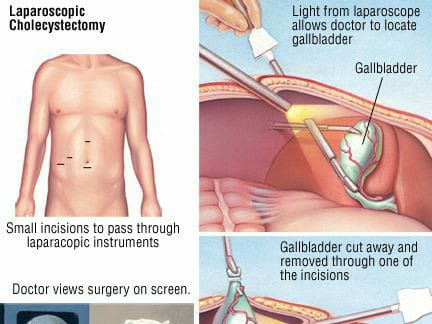
Nearly 90 percent of patients who want treatment for their gallstones undergo a type of surgery called laparoscopic cholecystectomy. In this procedure, a surgeon uses a small light and camera placed through a small incision into your abdomen. The camera, called a laparoscope, allows the surgeon to see what he or she is doing during the operation by watching a video screen. The patients recover very fast in one day after surgery