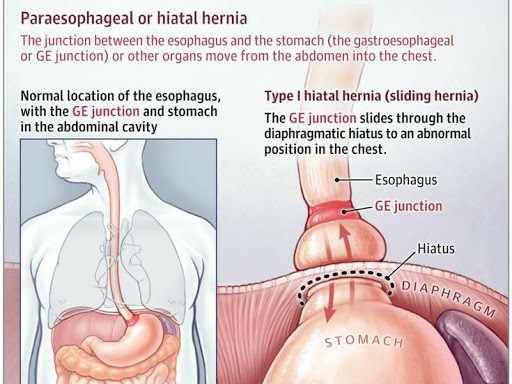
The hiatus is an opening in the diaphragm (a muscle separating the chest from the abdomen) throug…
The hiatus is an opening in the diaphragm (a muscle separating the chest from the abdomen) through which organs pass from the chest into the abdomen. The lower part of the esophagus and the stomach normally reside in the abdomen, just under the diaphragm. The gastroesophageal (GE) junction is the area where the esophagus connects with the stomach and is usually located 1 to 2 inches below the diaphragm. A hiatal or paraesophageal hernia occurs when the GE junction, the stomach, or other abdominal organs such as the small intestine, colon, or spleen move up into the chest where they do not belong.
Common Symptoms of Paraesophageal Hernia
Hiatal hernias and paraesophageal hernias may cause symptoms such as reflux and heartburn; nausea, burping, and vomiting; regurgitation of food; unexplained upper abdominal or chest pain; a sense of fullness after eating; bloating; shortness of breath or coughing; or a sense of food getting stuck in the chest.
Severe symptoms occur when the bowel or stomach twists or loses its blood supply. These include heart racing, palpitations, shortness of breath, chest pain, severe vomiting, lack of bowel movements, and severe abdominal pain. These symptoms require immediate medical attention.
Treatment
Treatment of paraesophageal hernias depends on the type of hernia and severity of symptoms and needs an antireflux surgery